投稿者: BeLocalCollection

  • Concept of :縁

    The Kind of Connection You Don’t Plan For

    There are moments that feel small at first.

    You walk into a quiet street without intending to.
    You pick something up without knowing why.
    You meet someone for only a few minutes, but the interaction stays with you longer than expected.

    Nothing about these moments feels dramatic.
    They’re not designed, scheduled, or explained.

    But later, you remember them clearly.

    In Japanese, there’s a word that sits quietly behind experiences like this: 縁 (en).


    What 縁 Really Means

    縁 is often translated as “fate” or “connection.”
    But neither translation is quite accurate.

    It’s not fate in the sense of something predetermined.
    And it’s not just connection in a social or logical way.

    縁 refers to a kind of relationship that forms through timing, place, and encounter.

    Something becomes meaningful not because it was planned, but because it happened at the right moment, whether you understood it at the time or not.

    In everyday Japanese language, you’ll hear it used in simple ways:

    • 「ご縁がありましたね」(GOEN GA ARIMASHITANE)
      We were meant to cross paths.
    • 「縁があってここに来ました」(EN GA ATTE KOKONI KIMASHITA)
      Something led me here.

    It’s a way of acknowledging that not everything is random—but also not everything needs to be explained.


    Why 5 Yen Coins Matter at Shrines

    One of the most familiar expressions of 縁 appears at shrines.

    If you visit a shrine anywhere in Japan, you’ll often see people offering a 5 yen coin.

    At first glance, it looks like a practical choice.
    It’s small, accessible, easy to give.

    But the reason is linguistic.

    “5 yen” is pronounced go-en , the same sound as the word for meaningful connection ご縁.

    So when people offer a 5 yen coin, they’re not just making a donation.
    They’re quietly expressing a wish for good relationships, good encounters, and the right kind of opportunities.

    Not something forced.
    Not something calculated.

    Just the hope that the right connections will form.

    It’s a small action, but it reflects something larger about how people here think about life:

    That what matters often comes through how things connect, not just what they are.


    Where 縁 Shows Up in Everyday Life

    You don’t need to visit a shrine to experience 縁.

    It appears in much quieter ways.

    You might notice it when:

    • You walk into a shop and something immediately feels right, even before you understand why
    • You meet someone while traveling and the conversation stays with you long after
    • You pick up an object, not because you need it, but because it feels like it belongs with you

    These moments don’t follow a clear logic.

    If you try to explain them too precisely, they start to lose their shape.

    But they’re not accidental either.

    They’re the result of where you are, when you arrive, and what you’re open to noticing.

    In Japan, there’s a general comfort with this kind of ambiguity.
    Not everything needs to be optimized or justified.

    Sometimes, it’s enough to recognize that something happened—and that it mattered.


    Travel Changes How You Notice These Moments

    Travel naturally creates more opportunities for 縁.

    When you’re in a new place, your usual patterns are disrupted.
    You walk differently.
    You look more carefully.
    You’re slightly more open, even without realising it.

    Kamakura is one of those places where this becomes especially visible.

    It’s close to Tokyo, but the pace shifts.
    The streets are narrower.
    The spaces between things feel more intentional.

    You move through temples, small shops, quiet residential areas, and the coastline, all within a short distance.

    Because of that, your attention adjusts.

    You start noticing things you might normally pass by.

    A small object in a window.
    A conversation overheard.
    A shop you didn’t plan to enter.

    And sometimes, one of those moments stays with you.


    Objects and the Idea of Connection

    In Japan, objects are often understood through their relationship to people.

    Not just who made them, but who used them, where they were kept, and how they were passed on.

    That’s part of why certain items feel different when you encounter them in person.

    You’re not just looking at the object itself.
    You’re sensing the continuity around it.

    This is especially true with things that have lived previous lives—textiles, tools, small everyday items that were kept and used over time.

    You don’t always know their full history.
    But something about them feels settled.

    And when you decide to take one with you, it doesn’t feel like a random purchase.
    It feels closer to a continuation.

    That, too, is a form of 縁.


    A Small Shift in How We Use the Idea

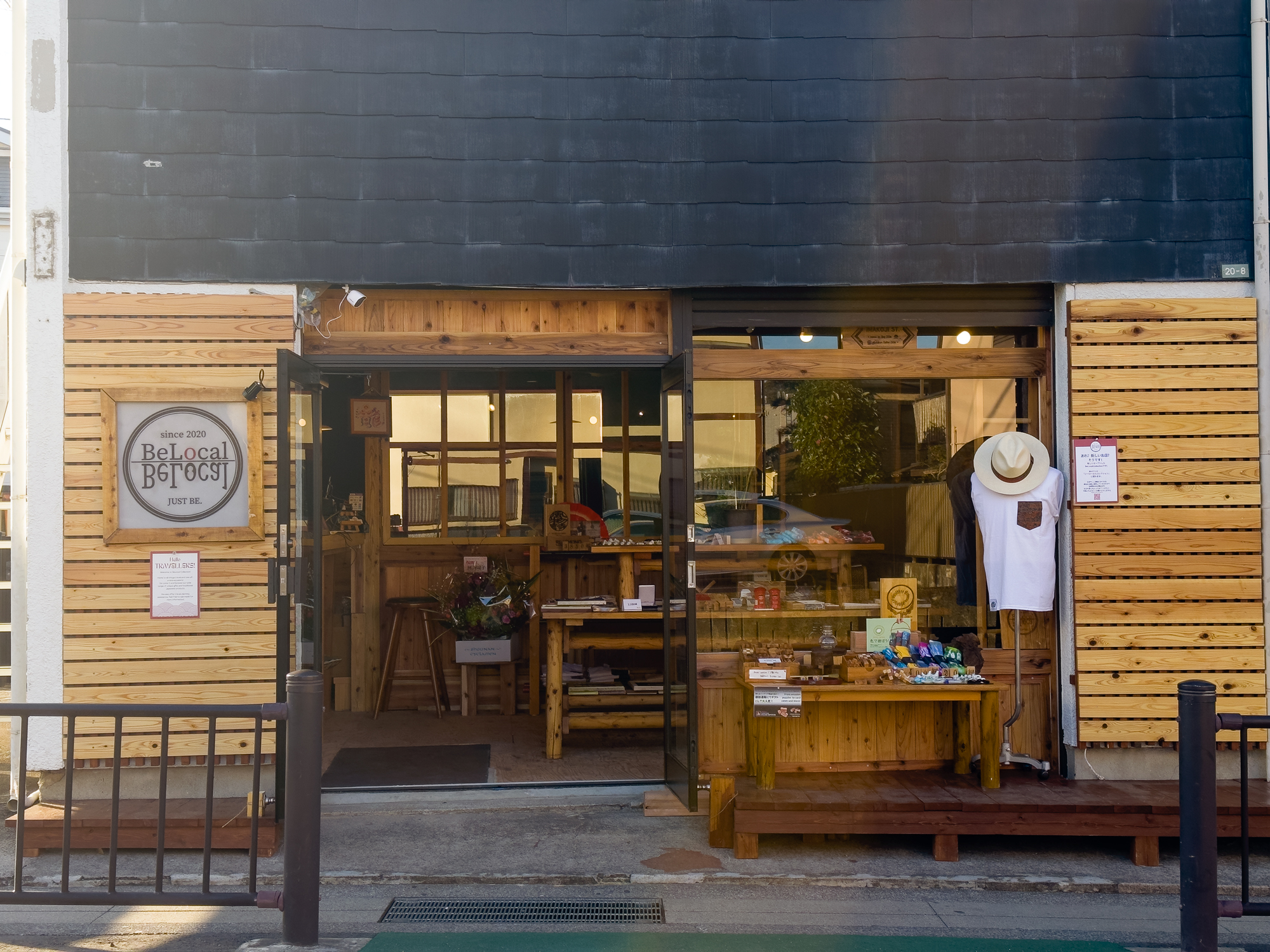
    At our shop in Kamakura, we’ve started to think about 縁 in a slightly different way.

    Not as something abstract, but as something that happens between people, places, and objects.

    It’s the moment someone walks in without a plan.
    The pause when they pick something up.
    The conversation happens naturally, without needing to lead anywhere.

    Sometimes people find something immediately.
    Sometimes they don’t.

    But the important part isn’t whether they buy something.

    It’s whether something connects.

    That’s why, in a small way, we’ve taken inspiration from the 5 yen idea.

    Not literally replacing currency, but shifting the mindset.

    Instead of thinking in terms of 円 (yen, money), we think more in terms of 縁 (connection).

    What brought someone here?
    What caught their attention?
    What made them stop, even briefly?

    Those are the parts we pay attention to.


    What You Take With You

    Not every visit leads to something tangible.

    You might walk in, look around, and leave without buying anything.

    But you still carry something with you.

    A memory of a space.
    A feeling about a place.
    A moment that didn’t need to be explained.

    Other times, you might leave with an object.

    And later, that object becomes tied to where you found it.
    It reminds you of a specific street, a specific day, a specific version of yourself.

    That’s when it becomes more than just an item.

    It becomes part of a connection that continues beyond the moment.


    A Quiet Way to Think About Connection

    縁 doesn’t ask you to believe in anything.

    It doesn’t require a system or a conclusion.

    It’s simply a way of noticing that some things feel more connected than others—and that those connections often appear when you’re not trying to force them.

    If you’re travelling, you’ll likely experience it without realising.

    If you’re paying attention, you might start to recognise it.

    And if you find something, or somewhere, that stays with you a little longer than expected, that’s usually enough.


    If You’re in Kamakura

    If you find yourself walking through Kamakura, take your time.

    Not everything here needs to be planned.

    Some of the more meaningful moments tend to happen in between the things you intended to do.

    If you pass by our shop, feel free to step in.

    There’s no expectation to find something.

    But sometimes, people do.

    Visit us in Kamakura, or explore our collection online, you might find something you weren’t looking for 👀

  • WHO IS MINASA KASAI? 河西美南沙のビジュアルアート

    WHO IS MINASA KASAI? 河西美南沙のビジュアルアート

    「色」で紡ぐ感情の詩

    Minasa Kasai と創る新たな世界


    日本語

    Minasa Kasai は、ベルリンを拠点に活動するアーティスト/グラフィックデザイナーです。

    彼女の作品には、色そのものが感情のように立ち上がる感覚があります。
    輪郭をはっきり説明しすぎず、見る側に解釈の余白を残す。
    そのため、作品と向き合う人それぞれの記憶や気分によって、受け取り方が少しずつ変わっていきます。

    抽象表現の魅力は、意味を一つに固定しないことにあります。
    Minasa Kasai の作品もまた、色、リズム、重なりによって感情の流れをつくり、言葉になる前の感覚へ静かに触れてきます。


    English

    Minasa Kasai is a Berlin-based artist and graphic designer. On the Kamakura T-Shirts product page she is listed as “1999– Artist / Graphic Designer,” and her Instagram profile also identifies her as Berlin-based.

    Her work has a way of letting color speak before language does.
    Rather than over-defining the image, it leaves room for interpretation.
    That openness allows each viewer to encounter the work differently, through their own mood, memory, and perspective.

    This is part of what makes abstraction powerful.
    Meaning is not locked into one fixed reading.
    In Minasa Kasai’s work, color, rhythm, and layering create an emotional movement that feels immediate, even before it becomes explainable.


    日本語

    公開されているプロフィールでは、彼女は日本とオーストラリアの背景を持つアーティストとして紹介されており、Kamkura T-Shirts 側ではベルリン在住のアーティストとして展開されています。

    こうした複数の文化的背景は、彼女の作品にそのまま説明的に現れるわけではありません。
    むしろ、はっきりと国籍性を押し出すのではなく、感覚の層としてにじみ出てくる。
    だからこそ作品は、どこか自由で、どこか移動の記憶をまとっているように見えます。

    色の選び方には勢いがありますが、ただ派手なわけではありません。
    強さの中に繊細さがあり、偶発性のように見える部分にも、視線を惹きつけるバランスがあります。


    English

    Public-facing profile text describes her as having Japanese and Australian background, while Kamakura T-Shirts presents her as a Berlin-based artist.

    These multiple cultural references do not appear in an overly literal way.
    They feel less like direct explanation and more like atmosphere—something layered into the work rather than stated outright.
    That may be part of why the work feels open, fluid, and slightly unbound by one single frame of reference.

    Her use of color is energetic, but not careless.
    There is force in it, but also sensitivity.
    Even where the image feels spontaneous, there is enough balance to hold the eye.


    Minasa Kasai と Kamakura T-Shirts のコラボレーション

    A Collaboration with Kamakura T-Shirts


    日本語

    BeLocal Collection の元記事では、Minasa Kasai と Kamakura T-Shirts の出会いを、アートとファッションの新たな接点として紹介しています。今回の企画では、彼女の作風が伝わる作品をTシャツとして展開し、日常の中でアートを楽しめる形へ落とし込んでいます。

    ここで重要なのは、単にアートをプリントすることではありません。
    Tシャツという身近な媒体にすることで、作品との距離が変わることです。
    壁に飾るものだった表現が、着ることで日常に入り込む。
    その変化によって、アートは鑑賞物であると同時に、個人の感覚に寄り添うものになります。

    Kamakura T-Shirts は、鎌倉という土地の静かな空気を大切にするラインです。
    そこに Minasa Kasai の色彩感覚が重なることで、穏やかさの中に感情の強度を持ったコレクションが生まれています。


    English

    The original BeLocal Collection article presents this collaboration as a meeting point between art and fashion. In this project, works that reflect Minasa Kasai’s visual language are translated into T-shirts, creating a way to experience art in everyday life.

    What matters here is not simply printing artwork onto clothing.
    It is the shift in distance.
    Something that might otherwise remain on a wall becomes part of daily life through wear.

    That changes the relationship between the viewer and the work.
    Art becomes not only something to observe, but something to live alongside.

    Kamakura T-Shirts carries a quiet connection to place.
    When combined with Minasa Kasai’s use of color, the result is a collection that feels calm on the surface, yet emotionally vivid underneath.


    日常の中でアートに触れる

    Bringing Art Into Everyday Wear


    日本語

    このコレクションは、アートをもっと近くに感じたい人に向けた提案でもあります。
    特別な場所で構えるのではなく、普段の装いの中で自然に触れること。
    それによって、作品はより個人的なものとして残っていきます。

    Minasa Kasai の表現は、説明しすぎないからこそ余韻があります。
    その余韻を、Tシャツという形で持ち歩けること。
    それがこのコラボレーションの魅力です。

    店頭またはオンラインで、ぜひご覧ください。


    English

    This collection also offers a simple idea: art can exist closer to daily life.
    Not only in formal spaces, but in what you wear, return to, and carry with you.

    Because Minasa Kasai’s work resists over-explanation, it leaves an afterimage.
    That lingering quality is part of what makes it compelling in wearable form.

    You can explore the collection in-store or online.


  • LIFE OF YOSHIO HAYAKAWA | 早川良雄と日本デザインの美意識

    LIFE OF YOSHIO HAYAKAWA | 早川良雄と日本デザインの美意識

    Kamakura T-Shirts アーティストコレクション


    日本語

    戦後の日本グラフィックデザインを語るうえで、早川良雄の存在は欠かせません。
    1917年に生まれ、広告、ポスター、ブックデザインなど幅広い分野で活躍し、日本の視覚文化の発展に貢献したデザイナーの一人です。

    彼の作品に共通するのは、過剰な装飾に頼らない構成です。
    研ぎ澄まされたレイアウト、抑制された色彩、そして余白を活かした表現。
    一見静かでありながら、確かな強さを持っています。

    それは単なる美しさではなく、「どう見せるか」を徹底的に考え抜いた結果とも言えます。


    English

    Yoshio Hayakawa is considered one of the designers who contributed to the development of postwar Japanese graphic design.
    Born in 1917, he worked across advertising, posters, and book design, shaping Japan’s visual culture during a period of rapid transformation.

    His work is defined by restraint.
    Carefully composed layouts, controlled use of color, and a deliberate use of space.
    At first glance, his designs may appear quiet—but they carry a strong visual presence.

    This clarity is not accidental.
    It reflects a disciplined approach to how design communicates.


    美しさと機能のバランス

    Balance Between Beauty and Function


    日本語

    早川良雄のデザインには、日本的な感性とモダンデザインの合理性が共存しています。
    装飾を削ぎ落としながらも、冷たくならない。
    限られた要素の中に、視覚的なリズムと意味が成立しています。

    彼の思想の中には、「デザインは日常の中で機能するべきもの」という考え方がありました。
    特別なものとして飾るのではなく、生活の中で自然に存在するものとしてのデザイン。

    その姿勢は、現在のプロダクトデザインやファッションにも通じる考え方です。


    English

    Hayakawa’s work reflects a balance between traditional Japanese aesthetics and modern design logic.
    Even with minimal elements, his compositions never feel cold.
    There is rhythm and intention in what remains.

    At the core of his philosophy was the idea that design should function within everyday life.
    Not something distant or decorative—but something integrated into how people live.

    This perspective continues to influence design today, including fashion and product design.


    Kamakura T-Shirtsでの表現

    Interpreting This Philosophy Through Kamakura T-Shirts


    日本語

    今回のKamakura T-Shirtsアーティストコレクションでは、早川良雄の美意識に着目し、その考え方を現代のTシャツデザインとして再解釈しています。

    ここで重視したのは、単なるビジュアルの再現ではありません。
    構成の考え方や余白の扱いなど、デザインの根本にある要素を日常着として落とし込むことです。

    結果として、強さと静けさが共存するデザインに仕上がっています。
    日常の中で自然に着られながらも、どこか印象に残る一枚です。


    English

    This Kamakura T-Shirts artist collection draws from Hayakawa’s design philosophy and reinterprets it through contemporary apparel.

    Rather than replicating visuals directly, the focus was on translating underlying principles—composition, balance, and use of space—into wearable form.

    The result is a collection that feels both quiet and defined.
    Easy to wear, yet distinct enough to stay in memory.


    未来へつなぐ視点

    Carrying Design Forward


    日本語

    優れたデザインは、時間とともに役割を変えながら残っていきます。
    過去のものとして保存されるだけでなく、現代の中で新たな意味を持ち始めます。

    Kamakura T-Shirtsでは、こうしたデザインを日常の中で体験できる形で届けることを目指しています。
    着ることを通して、日本のデザインや感性に触れる機会になればと考えています。


    English

    Great design does not remain fixed in the past.
    It evolves—finding new relevance over time.

    At Kamakura T-Shirts, the aim is to make these ideas accessible in everyday life.
    Through something as simple as wearing a T-shirt, design becomes something you can experience, not just observe.